RNA modifying enzymes
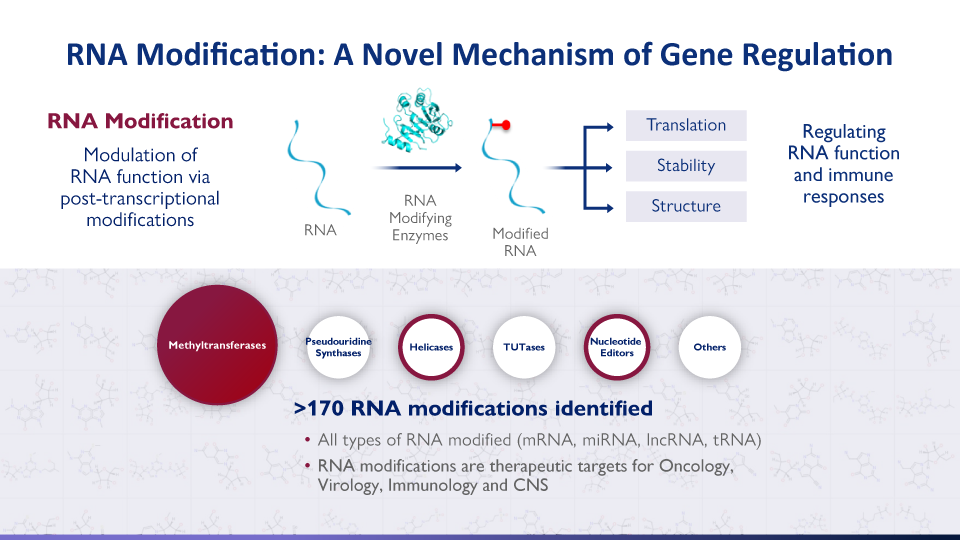
RNA (ribonucleic acid) is the only direct product of the human genome and one type of RNA, mRNA, acts as the template to which transfer RNAs (tRNA) bind to drive the synthesis of all proteins, the molecular machines of the cell. RNA is also known to be a key player in cellular decision-making, particularly in the form of non-coding RNA (ncRNA) such as microRNA, piRNA and long non-coding RNA.
Almost all of this RNA is chemically modified: over 150 different chemical modifications have been identified to date, catalysed by several large families of RNA-modifying enzymes. The discovery of reversible chemical modifications of RNA and their role in changing RNA activity and regulating key processes within the cell has revealed the importance of RNA modifications in the development of cancer and other diseases and has provided a wealth of novel therapeutic targets for drug discovery.
STORM’S Novel, Proprietary Pipeline
At the core of our R&D strategy is the development and use of cutting-edge techniques such as chemical biology, RNA-Sequencing, RNA mass spectrometry and functional genomics to elucidate the functional role of diverse RNA modifications. Using these latest insights, we have built a unique target discovery platform for the identification of new drug targets and we continue to develop state-of-the-art computational biology analysis methods to support the identification and validation of novel and clinically relevant targets.
The experience and capabilities STORM has developed can be readily applied to many disease indications and enable exploration of the untapped RNA modification enzyme target opportunity.